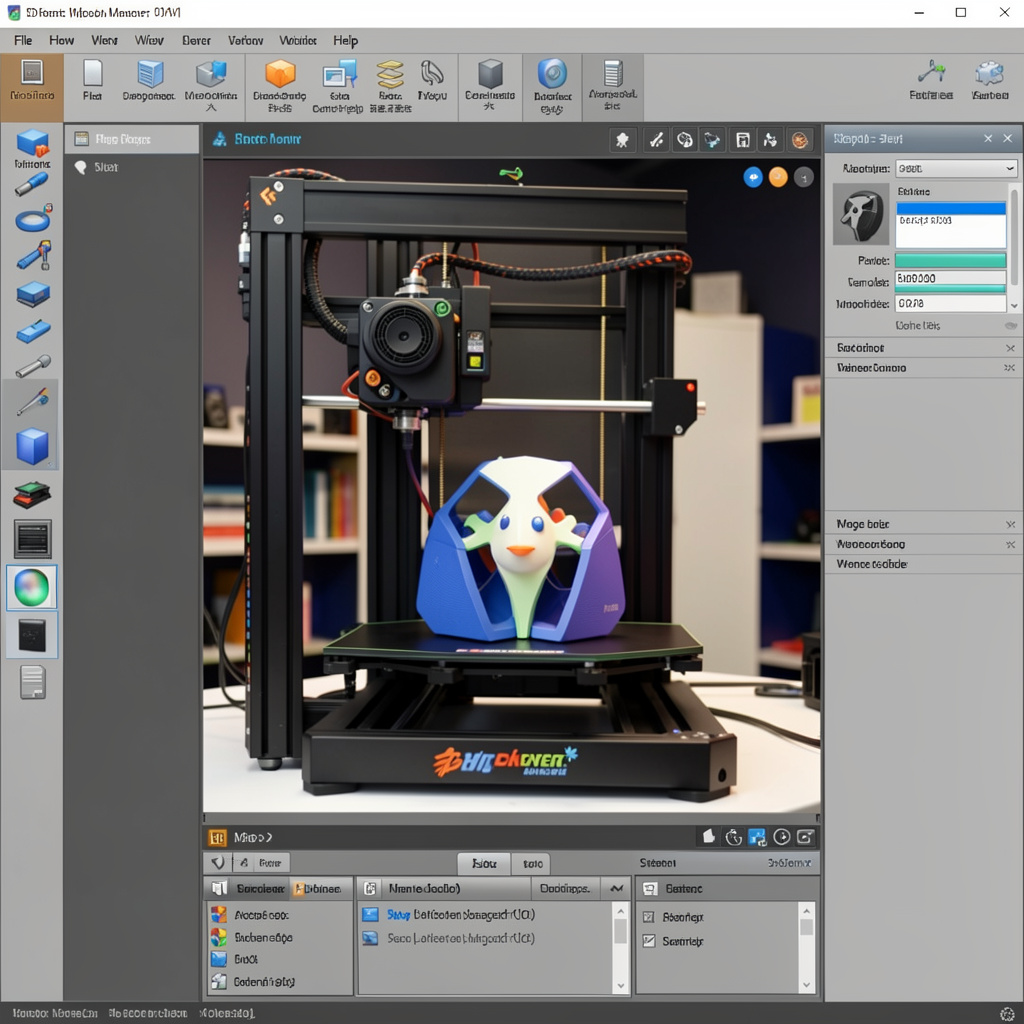



As 3D printing moves beyond single machines and hobby use, software quickly becomes the deciding factor between smooth operations and constant disruption. Managing multiple printers, users, files, and workflows manually creates delays, waste, and risk. That is why the question which is the best 3D printer management software? comes up so often across education, enterprise, and production environments.
The answer depends less on buzzwords and more on how well software supports real operational needs. Understanding what management software actually does, and how different environments use it, makes the decision clearer.
What Is 3D Printer Management Software?
3D printer management software centralizes printer operations. It connects machines, users, files, and workflows into a single system. Instead of managing printers one by one, teams gain a unified view of jobs, queues, usage, and performance.
At its core, this software removes manual coordination and replaces it with structured control.
Who Needs 3D Printer Management Software?
The need grows as soon as multiple printers, users, or locations come into play. Schools manage student access. Enterprises protect design files. Print farms optimize throughput. Research labs track usage and costs.
In all these cases, the same question appears: which is the best 3D printer management software?
Key Features That Define the Best 3D Printer Management Software
The strongest platforms offer centralized dashboards, print queues, user permissions, job tracking, and monitoring tools. These features reduce downtime and prevent miscommunication.
Software that lacks these fundamentals quickly becomes a bottleneck instead of a solution.
Cloud-Based vs On-Premise 3D Printer Management Software
Cloud-based systems enable remote access, fast setup, and easier scaling. On-premise solutions offer tighter internal control and data residency options.
The best platforms support both models, allowing environments to align deployment with security and infrastructure requirements.
Printer Compatibility and Ecosystem Support
Printer fleets often include different brands and models. Software limited to a single ecosystem restricts growth and flexibility.
Broad compatibility ensures long-term value and avoids costly replacements.
Remote Monitoring, Alerts, and Failure Detection
Remote monitoring provides real-time insight into print status, temperatures, and errors. Alerts notify operators before failures escalate.
These tools directly reduce material waste and idle printer hours.
User Management, Quotas, and Access Control
Managing who can print, when, and how much prevents abuse and conflicts. Quotas, role-based access, and approval workflows create fairness and accountability.
This capability becomes essential in shared environments.
Workflow Automation and Operational Efficiency
Automation handles job routing, queue prioritization, and printer assignment. Operators focus on output rather than administration.
Efficiency improves without adding staff or complexity.
File Security, IP Protection, and Compliance
Sensitive files require encryption, controlled access, and audit trails. Software must support secure uploads, storage, and transfers.
Security gaps create a risk that hardware alone cannot fix.
Also read: What Features Should I Look for in 3D Printer Management Software?
Analytics, Reporting, and Cost Visibility
Usage reports reveal printer utilization, failure rates, and material consumption. Cost visibility supports budgeting and optimization.
Without analytics, scaling becomes guesswork.
Ease of Use and Deployment Considerations
Powerful software that feels complex slows adoption. Clear interfaces and guided onboarding reduce friction.
The best platforms balance depth with usability.
Comparing Popular 3D Printer Management Software Options
Some tools focus on hobbyists. Others target enterprise fleets. Many lack either scalability or security depth.
This is why asking, "Which is the best 3D printer management software?" requires context, not rankings alone.
Common Mistakes When Choosing 3D Printer Management Software
Choosing based only on price, ignoring security, or underestimating future growth creates long-term limitations. Software should grow alongside operations.
Short-term thinking leads to frequent migrations.
How to Choose the Best 3D Printer Management Software for Your Needs
Assess printer count, user roles, security requirements, and growth plans. Match software capabilities to actual usage rather than ideal scenarios.
This approach avoids overbuying or underbuilding.
What the “Best” Software Looks Like for Different Use Cases
Education values access control and simplicity. Enterprises prioritize security and compliance. Print farms need automation and uptime.
The best solution adapts to each without forcing compromise.
The Future of 3D Printer Management Software
Software continues to move toward deeper automation, predictive failure detection, and centralized control across locations. Management platforms increasingly define operational success.
Hardware improvements alone no longer drive progress.
The Best 3D Printer Management Software Is the One That Scales With You
The real answer to, which is the best 3D printer management software? depends on how well it supports growth, security, and efficiency over time. The best platform removes friction today while remaining flexible for tomorrow.
3DPrinterOS delivers centralized control, secure file handling, remote monitoring, and scalable workflows across diverse environments. It supports schools, enterprises, and production teams with a single platform built to grow alongside operations.
Start scaling 3D printing operations with 3DPrinterOS today.


.png)