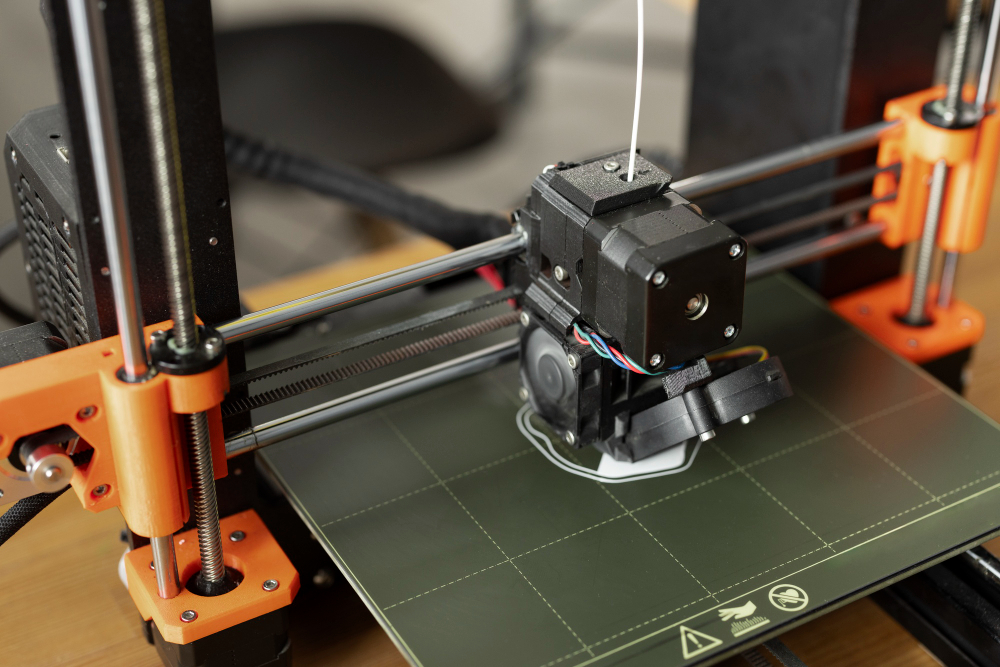


Cloud 3D printing has evolved far beyond experimental labs and isolated prototyping rooms. Today, it plays a critical role in how organizations design, test, produce, and innovate at scale. As printer fleets grow and users become more distributed, traditional desktop-based workflows struggle to keep up with modern demands.
The industries that benefit most from cloud 3D printing share common challenges: multiple users, multiple printers, limited visibility, and the need to scale without increasing operational overhead. Cloud-based platforms like 3DPrinterOS address these challenges by centralizing control, automating workflows, and providing real-time insight across entire 3D printing operations.
Below, we explore the industries seeing the greatest value from cloud 3D printing—and why centralized management has become a strategic necessity rather than a convenience.
Education and Research Institutions: Scaling Access Without Losing Control
Educational institutions were among the earliest adopters of cloud 3D printing—and for good reason. Universities, colleges, and research centers often manage dozens or even hundreds of printers across makerspaces, labs, and departments, serving thousands of users with varying experience levels.
Cloud 3D printing platforms allow institutions to:
- Provide remote file submission from anywhere
- Manage permissions by class, group, or department
- Monitor usage and printer availability in real time
- Reduce administrative workload for staff
Institutions such as MIT, Yale, Duke, Berkeley, Emory, and Rice University rely on 3DPrinterOS to ensure printers are actively used instead of sitting idle. Students gain flexibility, while administrators maintain visibility into who is printing what and where.
Most importantly, cloud tools enhance learning outcomes. Features like toolpath visualization and cloud slicing help students understand real-world design constraints such as overhangs, supports, and material behavior—turning every print into a learning opportunity.
Manufacturing and Automotive: Turning 3D Printing into an Operational Asset
Manufacturing and automotive companies benefit enormously from cloud 3D printing because they operate at scale and demand consistency. In these environments, additive manufacturing supports tooling, jigs, fixtures, functional prototypes, and production aids—often across multiple facilities.
Cloud-based platforms enable manufacturers to:
- Standardize workflows across locations
- Monitor printer performance and uptime
- Balance workloads across printer farms
- Reduce downtime and failed prints
Companies like Bosch and Koenigsegg use 3DPrinterOS to tailor workflows to their specific production needs. Centralized dashboards give engineering teams a real-time view of printer queues, machine health, and output, enabling faster decision-making and predictable delivery timelines.
For automotive and industrial organizations, cloud 3D printing shifts additive manufacturing from an isolated capability into a reliable production support system.
Aerospace and Advanced Engineering: Precision, Traceability, and Visibility
Aerospace and advanced engineering sectors operate under strict quality, traceability, and documentation requirements. In these environments, cloud 3D printing platforms provide the visibility and control necessary to meet regulatory and performance standards.
Key benefits include:
- Centralized monitoring of all print jobs
- Consistent slicing and configuration settings
- Data-driven insights into print performance
- Secure access control for sensitive designs
Cloud-based management ensures that every print follows standardized workflows, reducing variability and risk. Real-time monitoring and historical data also support quality assurance and continuous improvement initiatives.
For engineering-driven industries, cloud 3D printing platforms offer confidence, consistency, and operational transparency.
Healthcare and Medical Research: Controlled Access and Reliable Execution
Healthcare, biomedical research, and medical device development increasingly rely on 3D printing for prototypes, custom tools, and experimental components. While these environments may not always operate at massive scale, they require high reliability and strict access control.
Cloud 3D printing benefits healthcare organizations by:
- Limiting printer and file access to authorized users
- Ensuring consistent print settings and outcomes
- Enabling remote collaboration between teams
- Reducing manual oversight and errors
With centralized control, researchers and technicians can focus on innovation rather than printer management. Cloud platforms also provide the flexibility to scale operations as research programs grow.
Corporate Innovation Labs and R&D Teams: Faster Iteration, Less Friction
Corporate innovation labs and R&D teams thrive on speed and experimentation. However, without proper infrastructure, 3D printing can become a bottleneck rather than an accelerator.
Cloud 3D printing platforms remove friction by:
- Allowing teams to submit jobs remotely
- Automating queues and job prioritization
- Providing real-time status updates
- Reducing dependency on dedicated operators
This enables faster iteration cycles, better collaboration across teams, and higher utilization of existing hardware. Innovation teams can experiment freely without overwhelming support staff or infrastructure.
Multi-Location Organizations: One Platform, Global Visibility
Any organization operating across multiple sites stands to benefit from cloud 3D printing. Managing printers independently at each location creates silos, inefficiencies, and inconsistent workflows.
With 3DPrinterOS, organizations gain:
- A single operating system for all printers
- Unified analytics and performance metrics
- Consistent user experiences across locations
- Scalable growth without added complexity
Whether printers are located across campus buildings or global facilities, cloud-based management ensures alignment, efficiency, and control.
Why These Industries Choose 3DPrinterOS
Across all these industries, the decision to adopt cloud 3D printing often comes down to the same factors:
- Increased printer utilization
- Reduced manual management
- Fewer failed prints and lower material waste
- Scalable operations without increased headcount
With 300,000+ users, 6,000+ organizations, and 4 million parts printed, 3DPrinterOS has proven its ability to support complex, high-demand environments.
Conclusion: Cloud 3D Printing as a Competitive Advantage
The industries that benefit most from cloud 3D printing are those that value efficiency, scalability, and visibility. From education and manufacturing to healthcare and aerospace, centralized platforms transform 3D printing from a logistical challenge into a strategic asset.
As additive manufacturing continues to expand, cloud-based management is no longer optional—it’s the foundation for sustainable, scalable growth. With 3DPrinterOS, organizations across industries are printing smarter, scaling faster, and unlocking the full potential of their 3D printer fleets.