.png)



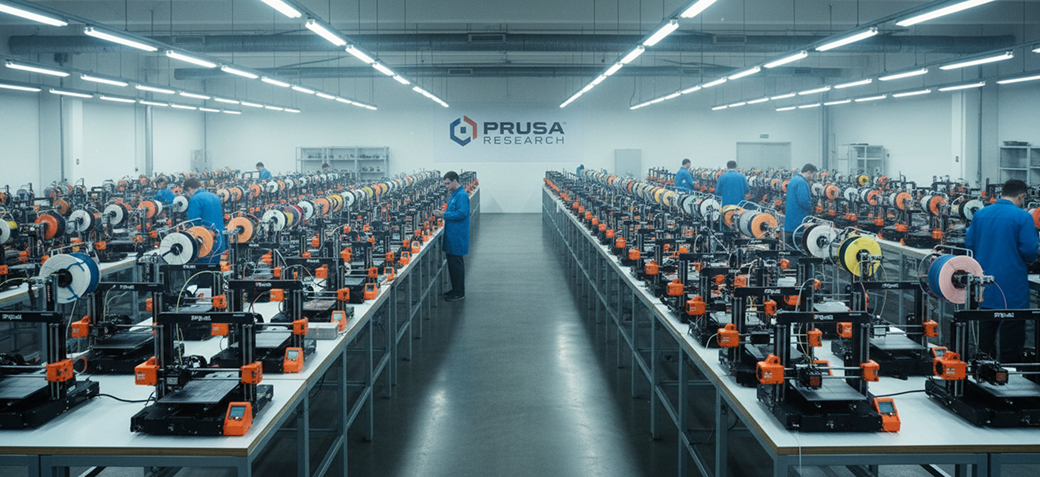
Additive manufacturing has shifted toward distributed, automated production models where output depends on coordination rather than proximity. Modern facilities operate dozens or even hundreds of machines simultaneously, often across multiple shifts and locations. In this environment, a remote control 3d printer setup becomes a structural requirement, not an optional upgrade. Manual supervision simply cannot match the speed and scale of today’s production demands.
As 3D printing moves deeper into production workflows, consistency, uptime, and responsiveness define success. Remote capabilities transform individual printers into a connected manufacturing system that supports growth without increasing operational strain.
Understanding Remote Printing in Modern 3D Workflows
Remote printing allows teams to manage jobs, files, and printer status from a centralized interface. Print queues move digitally. Machines receive instructions instantly. With remote 3d printing, production continues smoothly even when teams are not physically present on the floor, supporting flexible staffing and extended operating hours.
The Core Challenges of Managing 3D Printer Farms Without Remote Control
Without remote access, printer farms rely on physical checks and manual intervention. Failed prints remain unnoticed. Idle machines reduce output. Operators lose time moving between devices instead of optimizing workflows. As printer counts grow, these inefficiencies multiply and cap production capacity.
How Remote Control 3D Printer Systems Enable Scalable Production
A centralized remote printing system unifies printer management under one platform. Jobs are distributed evenly. Settings stay consistent across machines. Operators maintain visibility over the entire fleet at once. This structure allows printer farms to scale without adding proportional labor or complexity.
Also read: Simplifying Remote and Centralized 3D Printing with Smart Software Tools
Real-Time Monitoring: The Backbone of Automated Production Lines
Live monitoring forms the foundation of automated production. Camera feeds, printer status indicators, and live alerts reveal issues as they occur. Early visibility allows quick intervention, preventing wasted material and protecting delivery timelines.
Automation Advantages: Remote Printing, Scheduling, and AI Alerts
Automation strengthens remote workflows. Scheduled jobs move automatically from one printer to the next. Alerts notify teams when attention is required. AI-assisted detection flags abnormal behavior early. Together, these tools keep production moving without constant human oversight.
How Remote Printing Reduces Labor, Downtime, and Material Waste
Remote workflows reduce unnecessary labor by eliminating constant physical checks. Failed jobs stop sooner. Printers return to service faster. Over time, reduced downtime and lower material waste deliver measurable cost savings across high-volume production lines.
Security and Access Control for Distributed 3D Printer Teams
Remote platforms also enforce structured access. Role-based permissions regulate who can upload files, modify settings, or start prints. This protects sensitive designs while maintaining accountability across teams and locations.
How Remote Printing Supports Large-Scale, Multi-Facility Operations
Organizations operating multiple sites rely on remote printing to standardize workflows. Files, profiles, and monitoring remain consistent across facilities. Quality stays predictable while output scales globally, supporting both regional and centralized production strategies.
The Future of 3D Printer Farms: AI-Driven Remote Production
AI-driven analytics will continue shaping remote production. Predictive maintenance, performance insights, and automated optimization reduce unexpected downtime and extend machine life, strengthening long-term operational stability.
Remote 3D Printing Is the Foundation of Scalable Digital Manufacturing
Printer farms and automated production lines depend on visibility, coordination, and control. 3DPrinterOS delivers centralized printer management, secure access controls, and real-time monitoring designed for large-scale additive manufacturing environments. Build reliable, scalable operations with 3DPrinterOS and place full 3D printer remote control at the core of digital manufacturing growth. Contact us today to know more!


.png)